

Building a Career in Cloud Networking: Essential Skills and Certifications
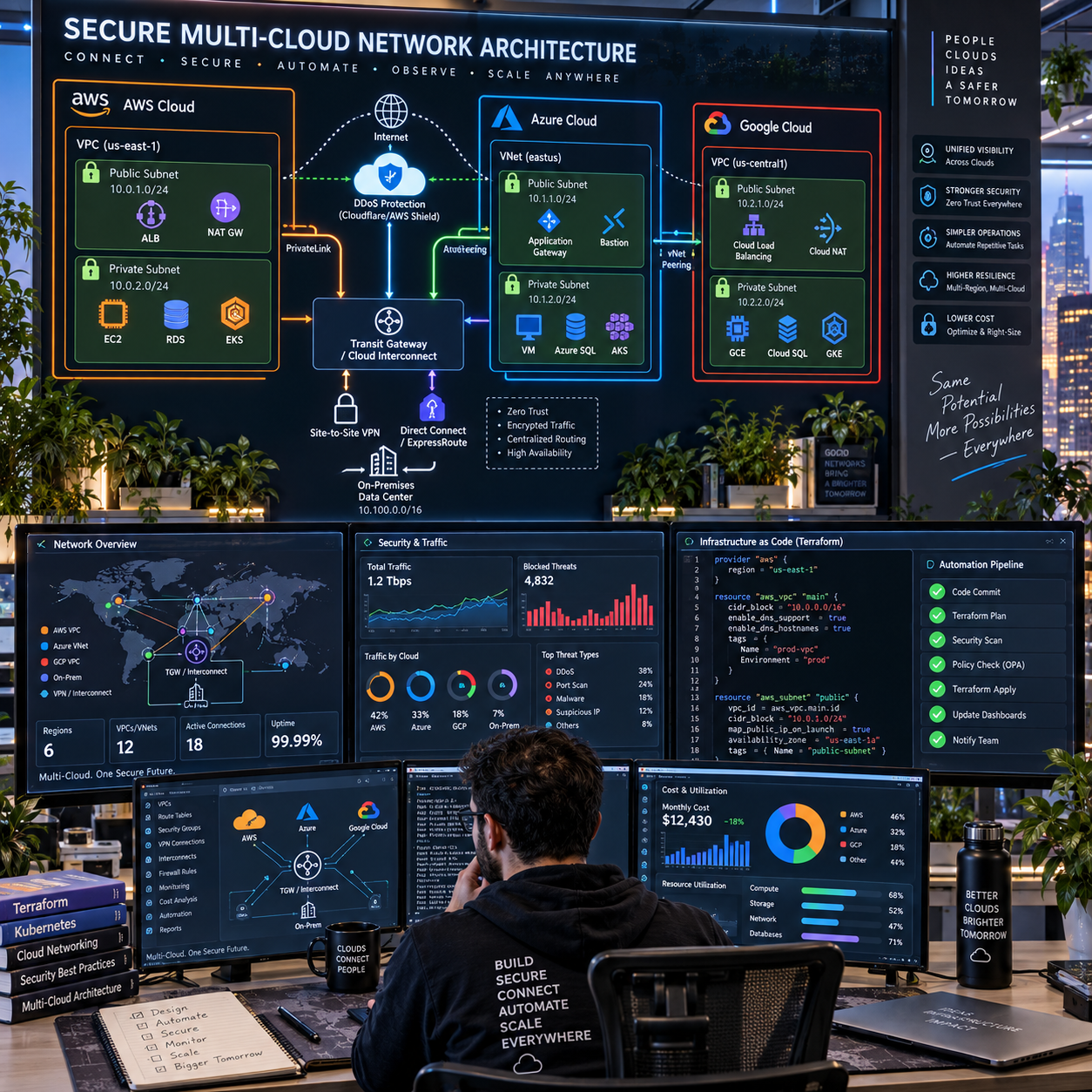
Cloud networking connects applications, users, data, and services across public cloud platforms, private environments, and business locations. A strong career in this field combines traditional networking knowledge with cloud architecture, security, automation, and hands-on troubleshooting.
What Is Cloud Networking?
Cloud networking is the design, deployment, and operation of network connections and security controls in cloud infrastructure. It supports application communication, internet access, private connectivity, identity-aware access, and reliable data exchange between cloud and on-premises systems.
Cloud environments replace much of the physical hardware work found in traditional data centers with software-defined services. Instead of configuring every switch manually, engineers may create virtual networks, subnets, routing tables, firewalls, load balancers, and private endpoints through a console, application programming interface (API), or infrastructure as code (IaC).
The underlying principles remain familiar. Traffic still depends on TCP/IP, routing, DNS, addressing, segmentation, and troubleshooting. The difference is that cloud networking adds elastic capacity, programmable infrastructure, shared-responsibility security, and provider-specific services.
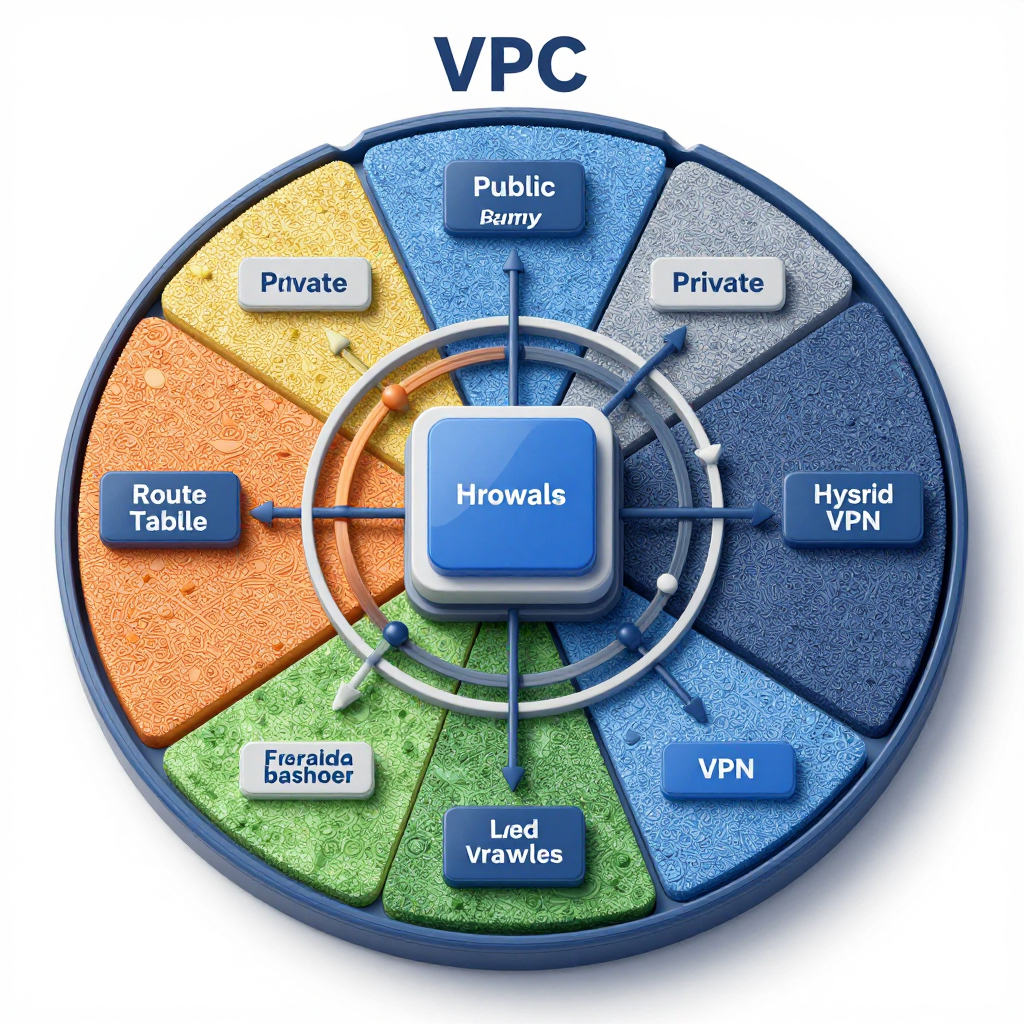
A virtual private cloud (VPC), or its equivalent on another cloud platform, provides an isolated logical network. Engineers divide it into public and private subnets, control routes, restrict inbound and outbound traffic, and connect workloads to users or other environments. This makes network architecture a central part of cloud reliability and security rather than a background implementation detail.
Cloud Networking Roles and Career Paths
Cloud networking careers range from implementation-focused engineering to architecture, security, and platform operations. The right path depends on whether you prefer deep network design, risk reduction, automation, or broad infrastructure ownership.
Cloud network engineer
A cloud network engineer designs VPCs, subnets, routing tables, load-balancing solutions, private connectivity, and monitoring. Daily work can include troubleshooting packet flow, managing domain name system (DNS) services, reviewing firewall rules, and supporting application teams.
Network architect
A network architect makes higher-level decisions about address spaces, connectivity models, resilience, segmentation, and hybrid or multi-cloud design. This role requires strong communication because architects translate business requirements into secure and supportable network architecture.
Cloud security engineer
Cloud security engineers focus on network security, identity and access controls, encryption, logging, threat detection, and policy enforcement. They may implement zero-trust principles, private service access, web application firewalls, and security monitoring across several accounts or subscriptions.
DevOps or infrastructure engineer
DevOps and infrastructure engineers manage application platforms and delivery pipelines while treating infrastructure as code. Networking is increasingly part of this work because Kubernetes clusters, container platforms, databases, and deployment systems all depend on correctly designed connectivity.
Career progression is rarely linear. A professional might begin in IT support, move into network operations, specialize in cloud networking, and later become an architect or security lead. Certifications can validate knowledge, but responsibility for production systems develops through repeated practical decisions.
Foundational Skills to Develop
Traditional networking fundamentals are the foundation of cloud networking. Learn how systems address, route, resolve, authenticate, and exchange traffic before concentrating on provider-specific services.
- TCP/IP and routing: Understand IPv4 and IPv6 addressing, subnetting, default gateways, routing tables, static routes, dynamic routing concepts, and packet flow.
- Switching and segmentation: Study Ethernet, virtual local area networks (VLANs), trunking, broadcast domains, and how logical segmentation maps to cloud subnets and security boundaries.
- DNS and network services: Learn name resolution, records, delegation, caching, DHCP, network time, and the difference between internal and public DNS.
- Operating systems: Become comfortable with Linux and Windows networking tools, interfaces, processes, logs, permissions, and service configuration.
- Troubleshooting: Practice using ping, traceroute, dig, nslookup, curl, netstat or ss, packet captures, flow logs, and centralized monitoring.
- Virtualization: Understand virtual machines, hypervisors, virtual interfaces, containers, and how workload placement affects connectivity and performance.
Effective troubleshooting follows a repeatable sequence: define the expected path, identify the source and destination, test each network layer, inspect routing and policy, and compare the observed result with the design. This method is more valuable than memorizing isolated commands.
Essential Cloud Networking Skills
Essential cloud networking skills include VPC design, subnetting, routing, load balancing, hybrid connectivity, identity controls, and layered network security. Engineers must connect systems while keeping traffic paths understandable, least-privileged, observable, and resilient.
Designing virtual networks
Start with address planning and workload boundaries. A segmented VPC may place internet-facing load balancers in public subnets, application servers in private subnets, and databases in isolated subnets. Route tables then determine which traffic can move between these tiers.
Good designs account for future growth, overlapping addresses, availability zones, failure domains, and operational ownership. A small test environment may need only a few subnets; a regulated enterprise may require centralized inspection, separate accounts, transit routing, and formal change controls.
Managing connectivity and traffic
Learn how internet gateways, network address translation, private endpoints, virtual routers, transit hubs, and load balancers work together. Hybrid connectivity commonly uses virtual private networks (VPNs) or dedicated private links between a cloud platform and an on-premises network.
Load balancing is also a networking concern. Engineers should understand health checks, listener rules, transport-layer versus application-layer balancing, TLS termination, and how uneven traffic or failed instances affect availability.
Applying security controls
Cloud network security uses multiple layers: security groups or stateful firewall rules, network access control lists, routing restrictions, identity and access management, encryption, private service access, and monitoring. The goal is not to create the largest rule set. It is to permit required communication and make exceptions visible.
Study provider guidance and standards such as the NIST Cybersecurity Framework to connect technical controls with risk management. Choosing strict segmentation for security can increase operational complexity, so document traffic flows and test changes before production rollout.
Automation and Infrastructure as Code
Automation and infrastructure as code make cloud network changes repeatable, reviewable, and easier to scale. They reduce manual drift, although automation still requires testing, access controls, rollback plans, and human design judgment.
Build capability in three layers:
- Scripting: Use Python, PowerShell, or shell scripting to query APIs, validate configurations, collect logs, and perform controlled operational tasks.
- Configuration and APIs: Learn how cloud resources expose settings through command-line interfaces, software development kits, and REST APIs. Treat authentication tokens and secrets carefully.
- IaC and delivery: Use tools such as Terraform, OpenTofu, CloudFormation, or provider-native templates to define VPCs, routes, firewall rules, and connectivity. Store code in version control and review changes through pull requests.
A useful project might create a VPC with private application subnets, controlled outbound access, flow logging, and a load balancer from a single codebase. Add automated checks that detect unrestricted administrative ports, overlapping CIDR ranges, or missing encryption. This demonstrates network automation, security awareness, and operational discipline in one portfolio project.
Certifications That Can Support Your Career
Cloud certifications can organize learning and provide a recognized signal, but they complement rather than replace production experience. Choose certifications according to your current knowledge, preferred cloud platform, and target role.
Entry-level networking certifications
Beginners often benefit from a vendor-neutral networking credential such as CompTIA Network+ or a vendor-focused certification such as Cisco Certified Network Associate (CCNA). These paths cover addressing, routing, switching, troubleshooting, and network operations.
Cloud fundamentals certifications
Cloud fundamentals certifications, including AWS Certified Cloud Practitioner, Microsoft Azure Fundamentals, and Google Cloud Digital Leader, introduce cloud concepts, shared responsibility, billing, security basics, and core services. They suit people moving from IT support or general infrastructure into cloud work.
Associate-level cloud certifications
Associate credentials usually provide more career value for hands-on roles. Examples include AWS Certified Solutions Architect - Associate, Microsoft Certified: Azure Administrator Associate, and Google Associate Cloud Engineer. These certifications test practical architecture or administration concepts, including identity, compute, storage, networking, and monitoring.
Advanced networking and security certifications
Experienced professionals can consider AWS Certified Advanced Networking - Specialty, Cisco Certified Network Professional (CCNP) Enterprise, Microsoft Certified: Azure Network Engineer Associate, or advanced security credentials such as Certified Cloud Security Professional (CCSP). Requirements and exam content change, so review each official certification page before planning.
A sensible sequence is networking fundamentals, one cloud fundamentals course if needed, an associate-level cloud credential, then a networking or security specialization. Avoid collecting certificates without building projects. A hiring manager will usually learn more from a documented design, test results, and troubleshooting explanation than from a long badge list.
How to Build Practical Experience and Advance
To gain cloud networking experience, build small environments, document design decisions, troubleshoot deliberate failures, and publish evidence of your work. A consistent six- to twelve-month learning plan is usually more productive than repeatedly starting new courses.
Use a staged project plan
- Stage one: Create a basic VPC or equivalent virtual network with public and private subnets. Test DNS, routing, security rules, and outbound access.
- Stage two: Add a load balancer, multiple availability zones, centralized logging, and a private database tier. Record expected traffic paths.
- Stage three: Build hybrid connectivity with a VPN simulation or cloud lab. Test route propagation, failure recovery, and restricted administrative access.
- Stage four: Rebuild the environment with IaC, add automated policy checks, and write a rollback procedure for network changes.
Keep a portfolio containing architecture diagrams, address plans, Terraform or template files, monitoring screenshots, incident notes, and short explanations of trade-offs. Remove credentials, customer data, and sensitive configuration before publishing anything.
Practice realistic failures: an incorrect route, blocked security rule, broken DNS record, expired certificate, unhealthy load-balancer target, or overlapping network range. Employers value engineers who can isolate causes and communicate impact clearly.
Review skills quarterly. Cloud providers introduce services frequently, while core networking principles change more slowly. Follow official documentation, read service release notes, participate in technical communities, and revisit security practices as your responsibilities grow. The durable career advantage comes from combining fundamentals with platform fluency and careful operational habits.
Frequently Asked Questions
Which certification should beginners pursue first?
Beginners with limited networking experience should start with Network+ or CCNA-level study. Those who already understand routing and troubleshooting can choose a cloud fundamentals credential or move directly to an associate-level cloud certification.
Is traditional networking knowledge required for cloud networking?
Yes. You do not need to master every data-center technology, but TCP/IP, subnetting, DNS, routing, security principles, and troubleshooting are essential for understanding cloud traffic behavior.
How can I gain cloud networking experience without a current cloud networking job?
Use free tiers and training labs carefully, build segmented VPC projects, automate them with IaC, and document troubleshooting exercises. Open-source infrastructure examples and nonprofit or community projects can also provide practical collaboration experience.
Which skills are most important for cloud network engineers?
The highest-value skills are network architecture, VPC design, routing, hybrid connectivity, network security, monitoring, incident troubleshooting, scripting, APIs, and infrastructure as code. Communication matters because network changes affect application and security teams.
How often should cloud networking professionals update their skills?
Review core skills continuously and set aside a focused learning cycle every quarter. Revisit certification objectives, provider documentation, security guidance, and automation practices at least annually, especially when your organization changes cloud platforms or architecture.