
Top 5 Programming Languages for Network Engineers in 2026
Why Programming Skills Matter for Network Engineers
Programming skills are increasingly vital for network engineers as modern networks demand automation, scalability, and integration with software-driven tools. Coding enables network engineers to automate routine tasks, manage complex configurations, and troubleshoot faster, improving overall network reliability and security.
Traditionally focused on hardware and manual setups, today’s network engineers must master languages and scripting that empower network automation, API integration, and DevOps methodologies. This evolution reflects the industry shift toward programmable networks and infrastructure as code, making programming proficiency a key asset for career advancement in networking roles.
Python: The Go-To Language for Network Automation
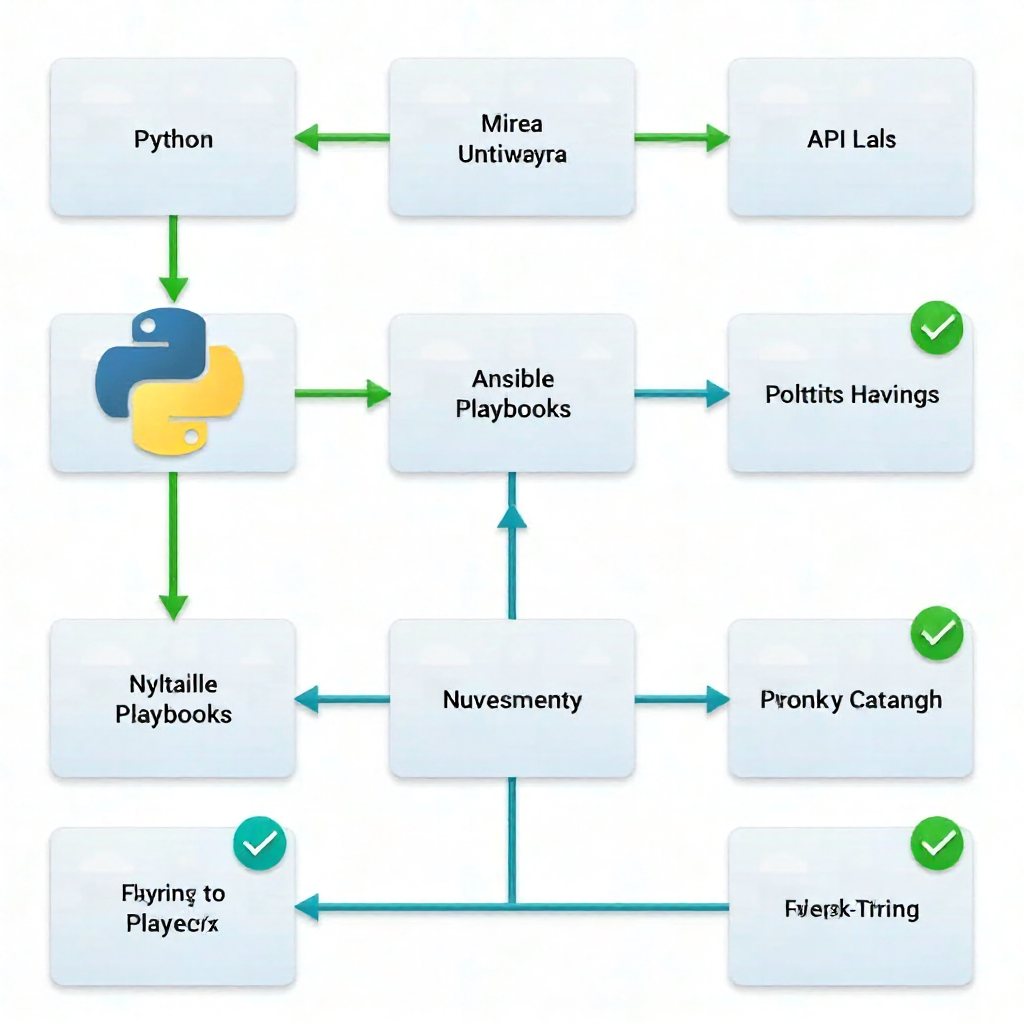
Python is the most popular programming language for network engineers because of its simplicity, vast libraries, and extensive automation capabilities. It excels in scripting network configurations, parsing device outputs, and integrating with APIs across Cisco, Juniper, and other vendors.
Network engineers rely on Python libraries such as Netmiko, NAPALM, and Paramiko to automate complex tasks like device provisioning, configuration management, and health monitoring. Being readable and widely supported, Python scripts accelerate automation workflows and reduce manual errors.
For example, Python scripts can connect to Cisco devices via SSH and push standardized configurations in seconds, replacing hours of manual CLI commands. Additionally, Python supports interaction with REST APIs, enabling dynamic control of network controllers and cloud platforms.
In the DevOps era, Python bridges network and software engineering teams, making it indispensable for integrating network automation into CI/CD pipelines and infrastructure as code.
Bash and Shell Scripting for Network Configuration
Bash and shell scripting are crucial for automating network tasks on Linux-based devices and servers. Many network appliances and firewalls run variations of Linux or Unix, where shell commands handle configuration, backups, and maintenance.
Learning Bash enables network engineers to write scripts that automate repetitive tasks like log analysis, interface resets, and scheduled system updates. Shell scripts also integrate with other tools such as Ansible for more complex workflows.
For example, a Bash script might monitor logs for security alerts or automatically gather device status reports across multiple Cisco or Juniper devices using SSH and CLI commands.
While less versatile than Python for API integration, Bash scripting remains a foundational skill for network engineers who manage Unix-based environments or require lightweight automation without external dependencies.
Go: Speed and Scalability in Network Programming
Go (or Golang) offers performance advantages for building fast, scalable network tools and monitoring systems, making it a strong choice for network engineers focused on high-performance applications.
Go’s concurrency model and compiled binaries enable the creation of efficient network services, packet processors, and telemetry collectors that can handle massive data loads with low latency.
While it has a steeper learning curve than Python or Bash, Go is gaining traction in network infrastructure projects, open-source tooling, and cloud-native networking components. Engineers developing custom network probes, software-defined networking (SDN) controllers, or telemetry pipelines often prefer Go for its reliability and speed.
Despite being less common for day-to-day automation, Go complements other languages by powering backend network systems where performance and scalability are critical.
JavaScript and APIs: Enhancing Network Management
JavaScript is increasingly important for network engineers working with REST APIs and web-based network management dashboards. Many modern network controllers and monitoring tools expose APIs consumed via JavaScript for interactive, real-time data visualization and control.
Using JavaScript in conjunction with HTML and frameworks like React or Vue, network teams build custom dashboards to visualize traffic flows, device statuses, and alert systems. JavaScript’s asynchronous capabilities simplify fetching and updating network data dynamically through APIs.
For example, engineers can develop web apps that query Cisco or Juniper device APIs to change configurations or display alert summaries on a unified dashboard.
While not traditionally associated with core network programming, JavaScript’s role in network management interfaces and API-driven control panels is expanding, making it a valuable skill for engineers involved in network operations and DevOps.
Ansible and YAML: Simplifying Network Orchestration
Ansible combined with YAML configuration files streamlines network orchestration by defining infrastructure as code and automating multi-device deployments. Ansible’s agentless architecture makes it ideal for managing diverse network devices including Cisco and Juniper switches, routers, and firewalls.
Network engineers use Ansible playbooks written in YAML to describe desired device states and automate complex configuration tasks like VLAN setup, firmware upgrades, and compliance checks.
This approach reduces configuration drift, ensures consistency, and enables rapid rollout across thousands of devices. Integrating Ansible with Python modules further extends automation capabilities.
While YAML itself is a markup format rather than a programming language, proficiency with it alongside Ansible is essential to network engineers pursuing network automation and orchestration roles.
How to Choose the Right Language for Your Networking Goals
Selecting the best programming language depends on your career focus, network environment, and automation objectives. Here’s a simple guide:
- For general network automation and API integration: Start with Python, which balances ease of learning and broad vendor support.
- If working extensively with Linux-based network devices: Master Bash scripting for quick CLI automation and log management.
- If your role involves building performance-critical tools or SDN components: Learn Go for scalable, high-speed network applications.
- To develop web dashboards or interact with network management APIs: Gain proficiency in JavaScript and API frameworks.
- For infrastructure orchestration across multiple devices and vendors: Focus on Ansible and YAML to implement infrastructure as code at scale.
Balancing these languages can position network engineers to excel in DevOps, network security automation, or cloud networking, adapting to evolving industry demands.
Frequently Asked Questions
Why is Python preferred for network engineering?
Python’s simple syntax, extensive networking libraries, and wide vendor support make it the preferred language for automating configurations, interacting with network devices, and integrating APIs efficiently.
Can I do network automation without programming?
While some GUI-based tools offer automation features without coding, learning programming significantly enhances your ability to customize workflows, manage diverse devices, and handle complex tasks beyond basic automation.
What is the role of scripting in network troubleshooting?
Scripting automates data collection, log parsing, and repetitive diagnostic commands, speeding up issue identification and resolution while reducing manual errors.
Are compiled languages like Go necessary for network engineers?
Compiled languages like Go are not mandatory for all network engineers but are valuable for roles requiring development of performant network tools, telemetry systems, or cloud-native networking solutions.
How do APIs fit into modern network management?
APIs allow programmatic control, monitoring, and configuration of network devices and controllers, enabling automation, orchestration, and integration with other IT systems in a centralized, standardized manner.